Why In-Car Entertainment Will Define the Future of Smart Mobility


Author
Thomas Hoffman
Published on
May 20, 2025
Blog Categories
Technology
Tutorials
Automotive
Smart Mobility Entertainment: The Next Frontier in Passenger Experience
Smart mobility entertainment is quickly emerging as a defining factor in how we experience transportation. Automation, electrification, and seamless connectivity are changing not only the vehicles we ride in but also how we experience time inside them.
We often hear about smarter navigation, safer autonomy, and more efficient fleet management. But there’s another story unfolding inside the cabin:
How do we make these rides enjoyable, memorable, and valuable for passengers?
That’s where in-car entertainment steps into the spotlight – not only as a feature, but as a strategic layer of the mobility experience.
From Transit Tool to Experience Platform
Cars, shuttles, and robo-taxis are no longer just about getting from A to B. They are turning into digital living spaces.
Whether it’s a personal EV, a robotaxi, or a shared autonomous shuttle, the interior is evolving to support more than transport. It’s becoming a space for entertainment, working, socializing, and relaxing.
For example, McKinsey estimates that over 95% of new vehicles will be connected by 2030, enabling richer passenger experiences. Meanwhile, data from AAA Foundation shows that drivers in the US already spend close to an hour per day in their vehicles. As autonomous mobility scales, that time will shift from driving to being driven – unlocking a new frontier for engagement, utility, and enjoyment inside the cabin.
Why Smart Mobility Entertainment Matters More Than Ever
Shared and autonomous mobility providers from robotaxi fleets to shuttle platforms and MaaS services are already transforming how cities move. But as innovation shifts from electrification to digital relevance, a new question is emerging:
What sets one ride apart from another when no one is driving anymore?
As vehicle performance becomes less of a differentiator, the in-cabin experience increasingly defines the brand. Passengers aren’t evaluating horsepower or torque, they are evaluating comfort, design, digital experiences, and how that time in transit makes them feel. In this new era, smart mobility entertainment plays a central role in shaping how people perceive comfort and connection during their trips.
According to Deloitte’s 2023 Global Automotive Consumer Study, in-vehicle technologies such as infotainment and connectivity are among the top decision-making factors for consumers choosing a vehicle.
Today’s vehicles, whether private EVs or public robo-fleets, are no longer just smart or connected. They are digital canvases, filled with touchscreens, voice assistants, and high-bandwidth data connections. Passengers now expect those screens to offer more than maps and menus, they expect engagement.
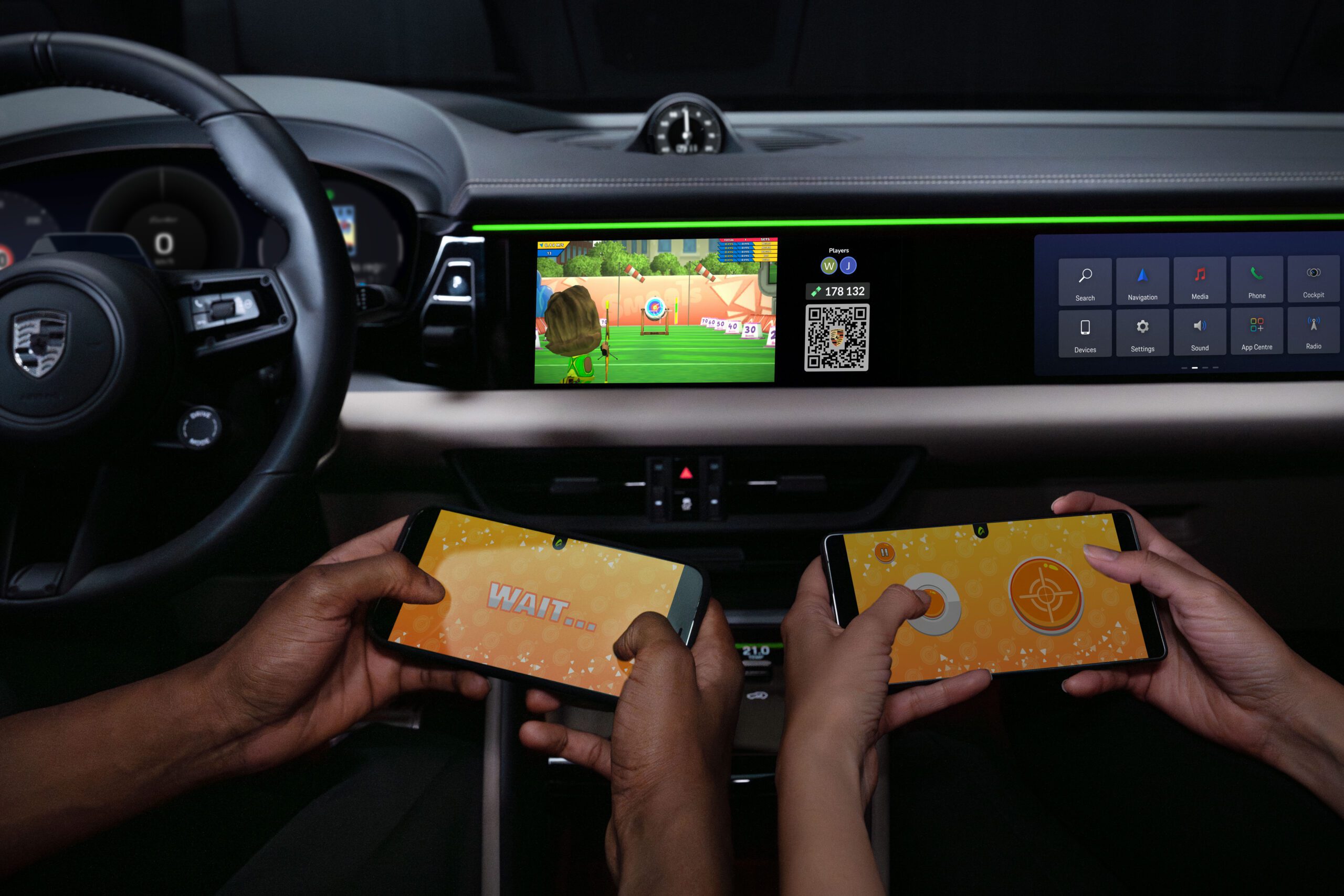
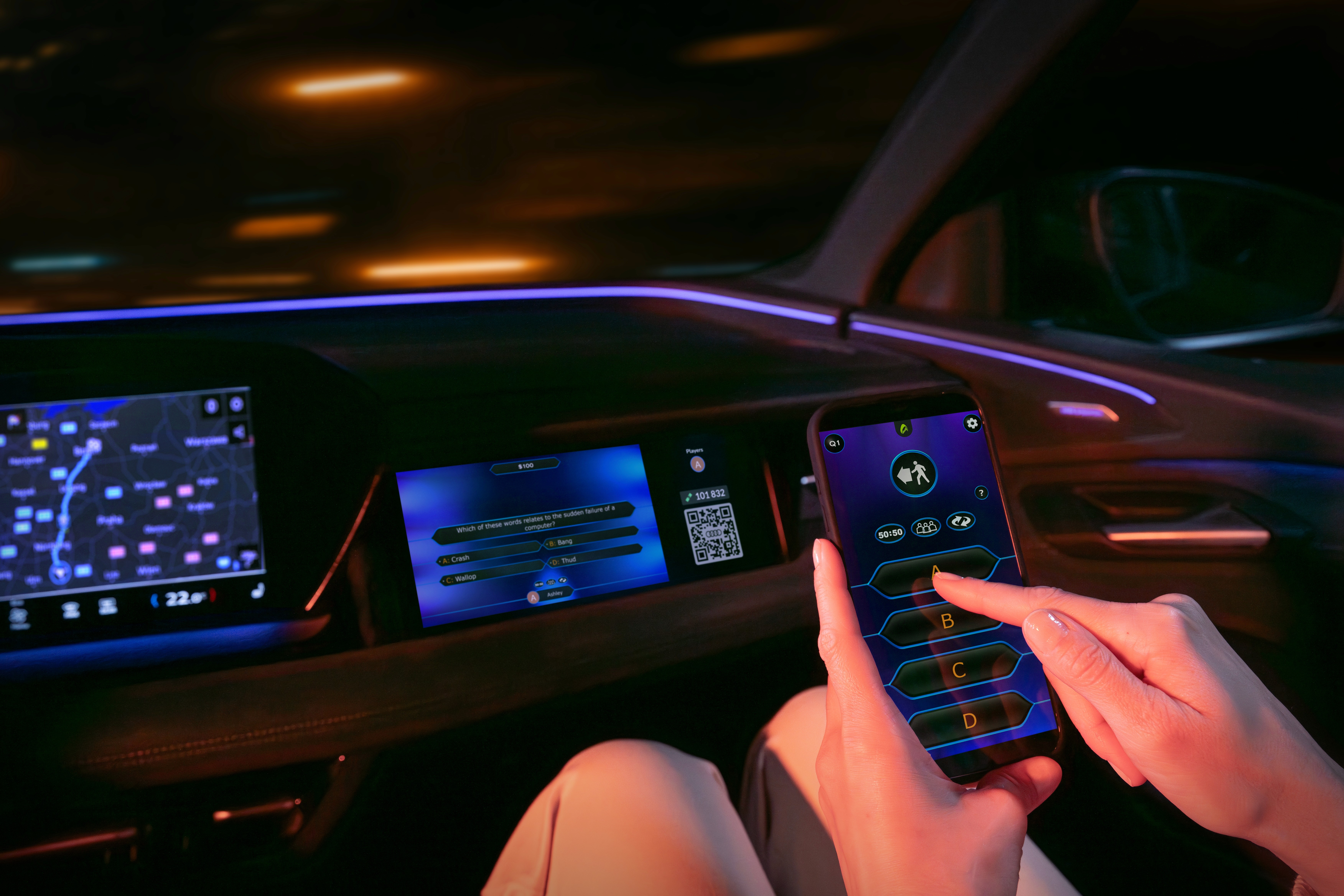
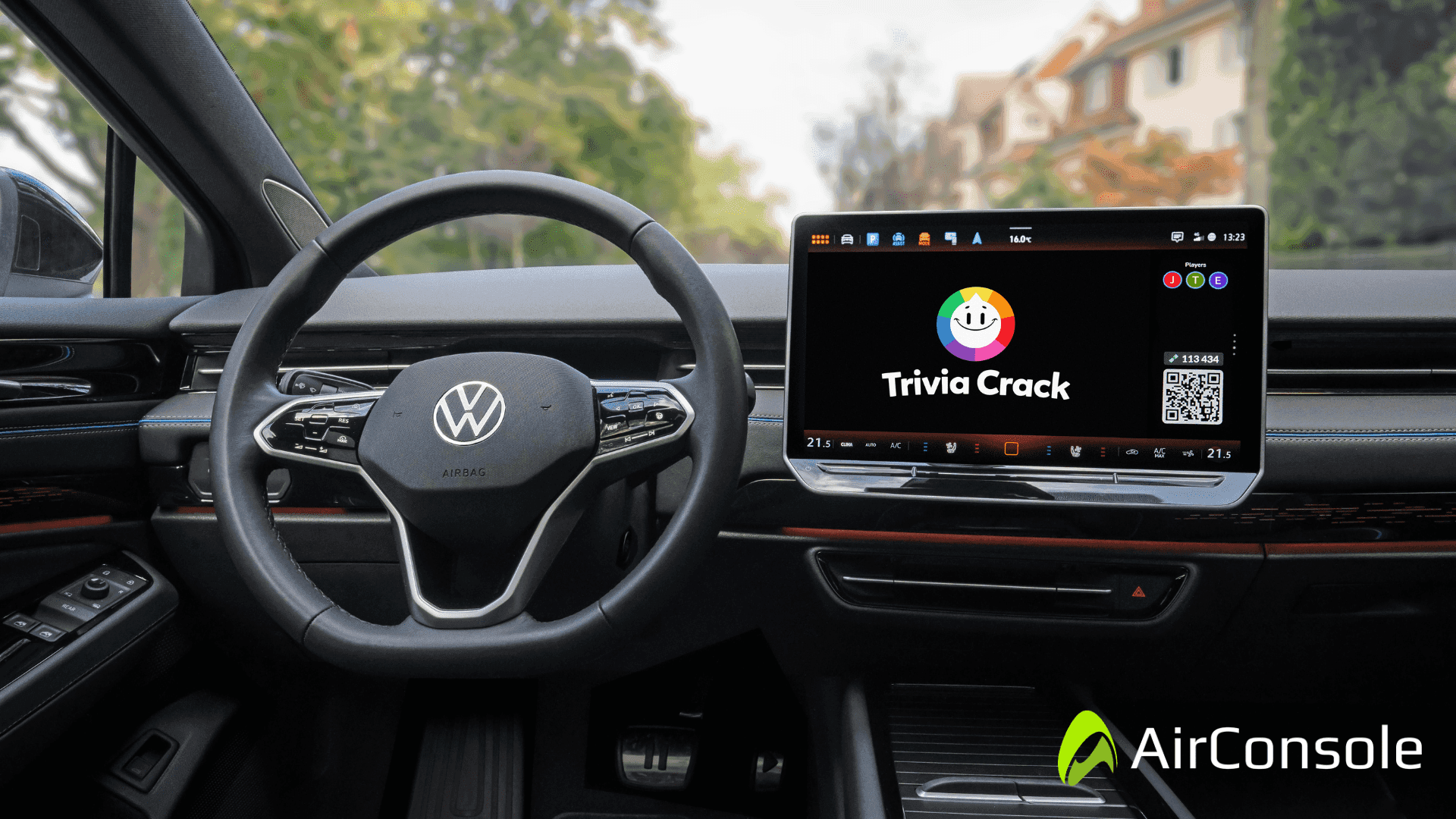
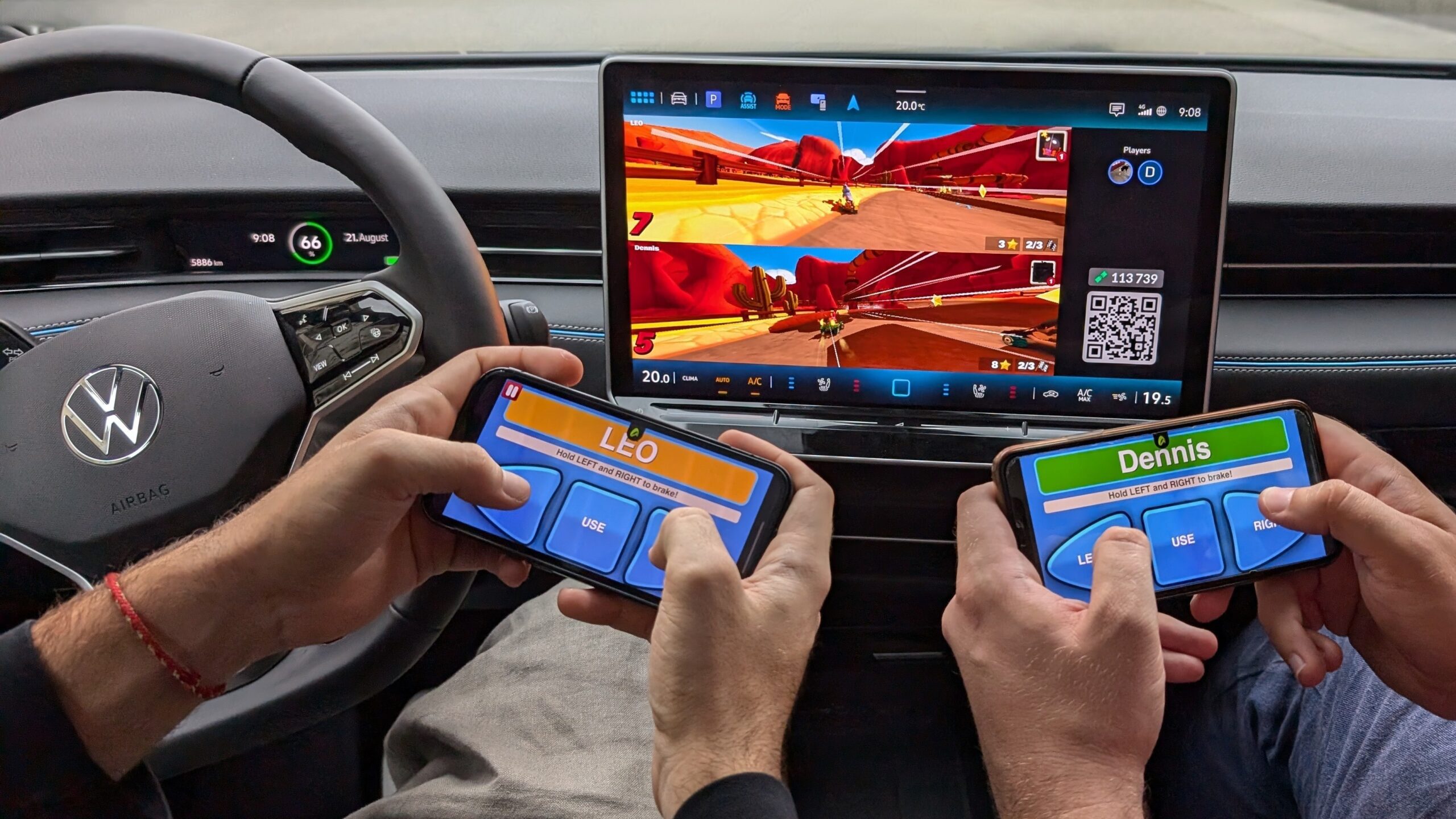
Entertainment, and particularly gaming, delivers on that promise. It turns idle time into valuable time. It brings joy to utility. And most importantly, it builds a reason for customers to choose your service again.
When all rides are efficient, it’s the experience that wins.
Gaming Is the Heartbeat of Smart Mobility Entertainment
By 2030, according to Grand View Research’s industry report, the global gaming industry is projected to exceed $500 billion in annual revenue. Once considered a niche interest, gaming is now the world’s most consumed entertainment format – spanning generations, geographies, and devices. Today, over 3.3 billion people play games regularly globally, with casual and mobile formats leading the way.
This rise isn’t just cultural, but rather structural. Gaming is interactive, accessible, and designed to fit into people’s daily rhythms. And that makes it uniquely suited for the in-vehicle experience.
In many ways, the automotive industry is entering its own “iPhone moment” – a shift from utility to platform. As vehicles become increasingly connected, equipped with high-resolution screens, app ecosystems, and constant connectivity, they’re gaining the capabilities to deliver rich, personalized experiences from inside the cabin.
And if we take a cue from smartphones, we can see what’s coming: games are the most popular app category accounting for 37% of all app downloads and about 59% of global consumer app spending, according to Business of Apps’ Mobile Game Demographics Data (2025). Gaming became the breakout use case of the mobile era – not by accident, but because it offered instant, social, and rewarding experiences on-demand.
We believe the same will happen in vehicles, especially as smart mobility entertainment becomes a defining use case. The hardware is ready. The audience is already playing. Now it’s about designing the right moments for the road.
In the context of smart mobility, gaming offers:
Active engagement vs. passive screen time: It invites participation, making every ride feel shorter and more immersive.
Short-session formats perfect for trips and charging stops: Unlike movies or series, games are designed for drop-in/drop-out play – ideal for unpredictable or short durations.
Shared experiences that enhance rides for families, friends, and even strangers: Multiplayer titles create natural moments of connection, especially in shared or social rides.
While video and audio content are linear and for the most part solitary, gaming is dynamic, social, and emotionally rewarding. Qualities that enhance brand recall and customer satisfaction.
In fact, it’s no surprise that the most forward-thinking mobility players are already exploring how gaming can transform their cabin from passive to participatory by turning every journey into a branded, joyful moment.